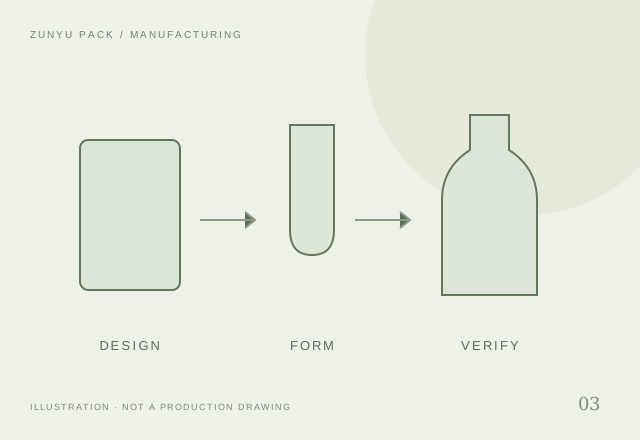
Injection moulding forms components
Injection moulding forms parts by injecting material into a mould. Extrusion blow moulding inflates a hollow parison, while injection stretch blow moulding starts with an injection-moulded preform. These process names describe different routes, not interchangeable labels for the same appearance.
| Route | Starting form | Brief focus |
|---|---|---|
| Injection | Mould cavity | Components |
| EBM | Parison | Hollow container |
| ISBM | Preform | Preform and bottle |
Evaluate the route with the design
Provide shape, neck, material and functional requirements when discussing the manufacturing route. Ask the supplier to explain the proposed approach and its constraints. A brand brief need not prescribe every equipment detail, but it should make the required outcome clear.
Do not use a process name as acceptance
Whichever route is proposed, approve drawings, component identities, appearance and functional checks. A manufacturing label does not establish formula, transport or sealing performance. Base acceptance on the evidence and records agreed for the specific project.
Your Project Checklist
- Share the complete structural brief
- Confirm the proposed forming route
- Accept against the product specification
Frequently Asked Question
Must the bottle and closure use the same process?
No. Select the process for each part’s geometry, material and function.
References and Editorial Note
The resources below provide technical background. The purchasing questions and checklists are compiled by 樽宇包装. Confirm project-specific decisions through drawings, technical evaluation and approved samples.
Sources checked: 19 October 2026