Start with the application
A useful material brief explains how the pack will be filled, handled and dispensed. Decide whether visibility, squeeze feel or a rigid presentation matters most. Ask the supplier to identify the proposed resin grade and sample construction rather than accepting a polymer name as the complete specification.
| Material | Initial focus | Confirm |
|---|---|---|
| PET | Clear presentation | Grade, wall and formula |
| HDPE | Personal-care handling | Squeeze, recovery and assembly |
| PP | Moulded closures | Geometry, seal and service life |
Evaluate the bottle and closure separately
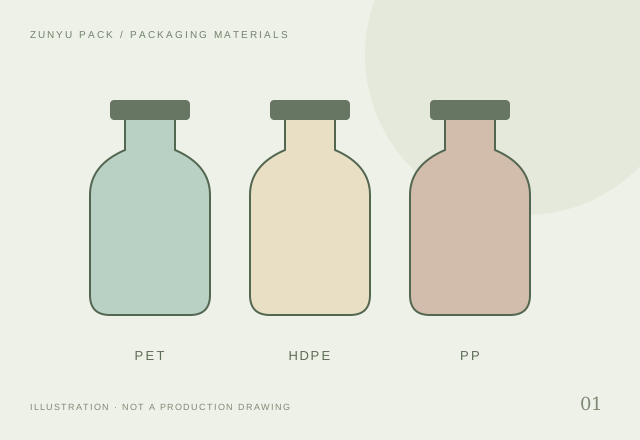
PET is a candidate for clear bottles, HDPE for opaque personal-care containers, and PP for many moulded closures. These are starting points, not universal compatibility rules. Review every product-contact component; a suitable bottle does not establish that the pump, gasket and dip tube are suitable.
Compare samples against one brief
Keep capacity, dimensions, weight, colour and closure identity together in a sample comparison sheet. Agree the evaluation conditions with your formulation and quality teams. Record both the contents and the packaging response, then assess which checks need repeating after a material or component change.
Your Project Checklist
- Describe the contents and use
- Identify grades and contact materials
- Record sample and drawing versions
Frequently Asked Question
Does one material suit every formula?
No. Evaluate the exact grade, formula, processing and storage conditions.
References and Editorial Note
The resources below provide technical background. The purchasing questions and checklists are compiled by 樽宇包装. Confirm project-specific decisions through drawings, technical evaluation and approved samples.
Sources checked: 19 October 2026