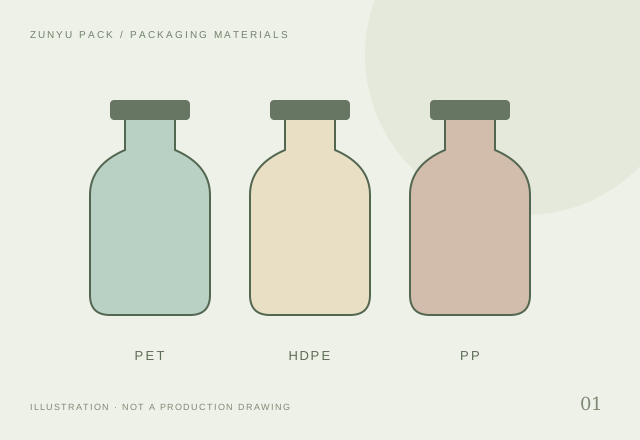
Map the contact path
Map the route from filling to dispensing and identify each material that may contact the contents. Include seals and internal parts, not only visible surfaces. Prior use in a similar product is a reason to investigate a candidate, not a substitute for your own evaluation.
| Contact point | Questions |
|---|---|
| Bottle wall | Grade, formula and storage |
| Pump and seal | Internal materials list |
| Tube and outlet | Length, material and dispensing |
| Outer surface | Possible exposure areas |
Ask the sample specific questions
Agree the questions before running a trial: changes to the contents, pack condition, leakage and dispensing behaviour. Let the responsible technical team define conditions and acceptance criteria appropriate to the project rather than copying a generic internet schedule.
Return changes to the evaluation process
After approval, keep a controlled component list and formula revision. When a grade, seal, supplier or formulation changes, record the affected contact path and ask the technical team which evidence needs updating. This is more useful for repeat orders than relying on an old photograph.
Your Project Checklist
- Share information needed for evaluation
- Identify every contact component
- Record conditions, results and changes
Frequently Asked Question
Is an empty-pack check enough?
An empty-pack inspection cannot answer every question about the filled combination.
References and Editorial Note
The resources below provide technical background. The purchasing questions and checklists are compiled by 樽宇包装. Confirm project-specific decisions through drawings, technical evaluation and approved samples.
Sources checked: 19 October 2026